
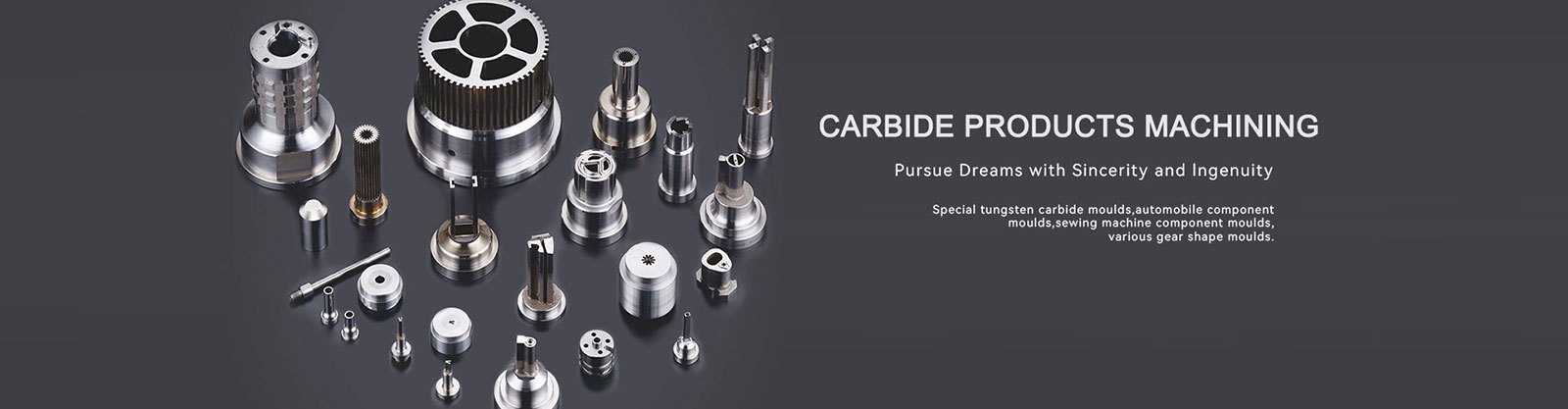
Military Tungsten Carbide: Weapons, Armor & Defense Uses
Exploring the Uses of Tungsten Carbide in the Military: Ammunition, Cutting Tools, Firearm Components, Ordnance Components, and Weapon Accessories.
Tungsten carbide’s role in the military weapons industry is pivotal due to its superior hardness, density, and ability to withstand extreme conditions, making it an ideal choice for various military applications. This robust material is crucial in enhancing the effectiveness and reliability of military equipment, from ammunition to ordnance and beyond.
Wide-Ranging Applications of Tungsten Carbide in Military Equipment
Ammunition:
Tungsten carbide is extensively used in the production of armor-piercing rounds, penetrators, and kinetic energy projectiles. Its exceptional hardness and density allow it to breach heavy armor effectively, making it an integral component in anti-tank and armor-piercing ammunition.
Email: [email protected] | WhatsApp: +86 186 3895 1317 | Request a Quote
Shaped-Charge Liners
The effectiveness of the shaped-charge jet in anti-tank missiles and armor-piercing projectiles depends on the liner material. Shaped-charge liners pressed from tungsten carbide powder have a high density, producing higher jet velocities and greater penetration depths than pure copper liners. Explosively formed penetrators (EFPs) also use tungsten carbide as a liner material to form high-velocity, self-forging projectiles for striking armored targets.
Cutting Tools, Measuring Tools,Dies and Gauges:
The manufacturing of military equipment often involves materials that are tough to machine. Tungsten carbide cutting tools are indispensable for shaping these materials, such as titanium and armor-grade steel, due to their high hardness and resistance to wear. These attributes ensure that the tools maintain their cutting edge under harsh conditions, thereby increasing efficiency and reducing downtime.
Firearm Components:
In firearms, tungsten carbide is used for parts that demand robustness and durability, such as bolts, extractor claws, firing pins, barrel and gun-tube liners, locking mechanisms, and wear-resistant guide rails for ammunition-feeding systems. The material’s wear resistance ensures these components can endure the rigors of repeated use, enhancing the firearm’s reliability and lifespan.
Ordnance Components:
For ordnance applications, tungsten carbide is used in critical parts like bearings, bushings, and wear plates. These components must withstand high impacts and extreme pressures, and tungsten carbide’s toughness and strength make it an excellent choice for these applications, ensuring longevity and functionality under stress.
Weapon Accessories:
The hardness and low friction properties of tungsten carbide make it suitable for smaller, yet crucial weapon accessories such as knife blades, bayonets, gun sights, and hammers. These items benefit from the material’s durability and resistance to abrasion, factors that are essential for field operations.
Armor Protection Systems
Hard Layers in Composite Armor
The composite armor used on modern tanks and infantry fighting vehicles typically has a sandwich structure consisting of a steel plate, a ceramic or cemented carbide layer, and a backing plate. Tungsten carbide plates or arranged layers of tungsten carbide balls can serve as the hard interlayer, effectively breaking incoming projectile cores and dissipating shaped-charge jet energy. Compared with alumina ceramics, tungsten carbide has a higher density and is less likely to fracture, making it suitable for applications requiring protection against multiple impacts.
Personal Ballistic Armor Plates
Some manufacturers use tungsten carbide composite layers in armor inserts for high-threat body armor, such as NIJ Level IV armor. They are not much lighter than solid steel plates, but they provide greater resistance to armor-piercing projectiles. In practice, this application is limited by weight and is mainly used for fixed guard posts and vehicle-mounted protection.
Reactive Armor Liners
In some types of explosive reactive armor (ERA), the internal metal flyer plates are made from thin tungsten carbide plates or sintered tungsten carbide powder plates. Their high density improves the disruption of shaped-charge jets.
Aerospace and Missile Systems
Rocket Motor Nozzle Throat Liners
The throat temperature of a solid rocket motor exceeds 3,000°C, and the combustion gases flow at extremely high velocities. Tungsten carbide-based ablation-resistant materials, typically composites of WC-Co and graphite, are used as throat liners. Their erosion resistance determines the operating life of the motor. These materials are widely used in small and medium-sized tactical missiles in China.
Gyroscopes and Inertial Navigation Systems
High-speed gyroscope rotors and bearings in inertial navigation systems require materials with uniform density, high hardness, and dimensional stability. Tungsten carbide components used in these systems must be machined to micron-level accuracy, providing one of the fundamental safeguards for missile precision.
Leading Edges of Hypersonic Vehicles
In publicly available literature from 2024 to 2026, tungsten carbide-based ultra-high-temperature composites have been listed as candidate thermal-protection materials for hypersonic weapons. The leading edges and control surfaces of these vehicles must withstand aerodynamic heating above 2,000°C, making tungsten carbide’s ability to retain hardness at high temperatures a key advantage.
Naval Vessels and Submarines
High-Pressure Valve Seats and Pump Seals
Tungsten carbide sealing rings and valve seats are widely used in shipboard hydraulic systems and submarine pressure-hull penetrations. Under seawater conditions involving corrosion, high pressure, and frequent opening and closing, ordinary stainless steel parts have an insufficient service life. Tungsten carbide provides the required combination of corrosion and wear resistance.
Torpedo Propulsion Systems
Torpedo turbine pumps and shaft-sealing components operate at high rotational speeds in environments exposed to seawater. Tungsten carbide mechanical seals are a standard choice.
Naval Gun Barrels
Large-caliber naval guns, including 76 mm, 100 mm, and 130 mm guns, face a significant conflict between firing rate and barrel life. Tungsten carbide liners and graded tungsten carbide coatings are among the primary technical approaches for extending service life.
Armored Vehicle Drivetrain and Running Systems
Tanks and heavy armored vehicles operate in extremely harsh environments, including deserts, muddy terrain, and gravel roads. Their drivetrain and running systems wear much faster than those of civilian vehicles.
- Track Pins and Bushings: Tungsten carbide hardfacing or solid tungsten carbide sleeves provide two to four times the service life of carburized steel parts.
- Road-Wheel Bearing Seals: Tungsten carbide sealing rings prevent sand particles from entering.
- Transmission Shift Forks and Synchronizer Wear Parts: These components maintain dimensional accuracy under frequent shifting impacts.
Military Engineering and Obstacle Breaching
Military Engineering Drilling and Excavation Tools
The cutting picks and drill bits used in military rapid-excavation equipment, such as tunnel-boring machines and portable rock drills, are essentially the same type of cemented carbide tools used in civilian mining, although military specifications are more stringent. They are used for rapidly constructing fortifications and penetrating concrete shelters.
Mine Clearing and Obstacle Breaching
Flail heads on mine-clearing vehicles, cutting edges on mine plows, and wear-resistant teeth on bulldozer blades directly contact the ground and explosive devices. Tungsten carbide hardfacing or inserts are standard solutions for these components. The amount of cutting-edge wear on a mine plow after crossing a single minefield clearly demonstrates the severity of these operating conditions.
Prefabricated Demolition Components
Prefabricated tungsten carbide shaped-charge liners used in directional demolition and metal liners used in linear shaped charges both fall within the field of military engineering.
Military Wear-Resistant Coatings and Surface Reinforcement
Thermal Spraying (HVOF/Plasma Spraying)
- WC-Co coatings on aircraft landing gear as a replacement for traditional hard chromium plating, particularly following environmental restrictions on hexavalent chromium
- Hardfacing on the friction surfaces of carrier-based aircraft arresting hooks
- Wear-resistant coatings on helicopter rotor shafts
- Plasma spraying on the inner walls of gun barrels
Hardfacing
- Tungsten carbide hardfacing repairs for worn parts during armored vehicle maintenance
- Rapid field repairs using tungsten carbide welding rods
Since 2024, cold-spray technology has advanced rapidly in military tungsten carbide coating applications. Its main advantage is that it does not create a heat-affected zone or damage the strength of the substrate.
Emerging and Advanced Applications (2024–2026)
Electromagnetic Railgun Projectiles
Electromagnetic launching requires projectiles to withstand extreme acceleration as well as electromagnetic and thermal loads. Tungsten carbide’s high density and high-temperature strength make it one of the primary candidate materials for projectiles. Related programs in the U.S. Navy and China have been publicly reported.
Hypersonic Weapon Structural Components
In addition to the thermal-protection applications mentioned above, the control mechanisms of hypersonic glide vehicles also require tungsten carbide wear-resistant parts, including hinges and bearings operating under high temperatures and intense vibration.
Drones and Loitering Munitions
Tungsten carbide is used in turbine bearings and sealing components for small turbojet engines. Although only a small amount is used, it is difficult to replace. Since 2024, the Russia-Ukraine conflict has driven the production of large quantities of low-cost loitering munitions, significantly increasing demand for miniature tungsten carbide components.
Additive Manufacturing (3D Printing)
Selective laser melting (SLM) and binder-jetting technologies for tungsten carbide powder are undergoing prototype validation in the defense industry. The goal is to enable rapid prototyping and small-batch production of military tungsten carbide components with complex shapes.

Why Does the Military Continue to Choose Tungsten Carbide?
This is because of its core properties: high density (15.6 g/cm³), high hardness (HRA 89–95), and high-temperature resistance (>1,000°C). Within the current industrial system, there are almost no perfect substitutes capable of meeting all three requirements at the same time. Depleted uranium alloys offer advantages in density and self-sharpening, but their radioactivity limits their range of use. Engineering ceramics are sufficiently hard but too brittle. Refractory metals such as tungsten and molybdenum have high densities, but their hardness and wear resistance are inferior to tungsten carbide-cobalt alloys.
Enhancing Military Capabilities with Tungsten Carbide
The diverse applications of tungsten carbide in the military weapons industry underscore its value in producing equipment that can perform reliably in the most challenging environments. Tungsten carbide not only improves the performance of military hardware but also contributes to the safety and success of military personnel by ensuring that their equipment functions optimally when it matters most.
The military applications of tungsten carbide cover the entire chain from individual ammunition to strategic weapon systems. It does not receive as much public attention as stealth coatings or semiconductor chips, but it is a fundamental material in the defense industry, characterized by high consumption, broad application coverage, and limited substitutability.
For defense manufacturers, the quality of tungsten carbide products directly affects the reliability and service life of weapon systems. Small differences in grade selection, including WC-Co, WC-Ni, and WC-TiC-Co, as well as powder particle size and sintering processes, will ultimately be reflected in performance differences on the battlefield.
In conclusion, the integration of tungsten carbide into military technology supports the development of more advanced, durable, and effective equipment. Its unique properties meet the demanding needs of the military weapons industry, making it a critical material in the defense sector’s ongoing efforts to enhance operational capabilities and ensure security.
Recommended Products


Still unsure which tungsten carbide grade fits your application? Our engineers will recommend the most suitable solution based on your requirements. MOQ: 1 piece, with competitive low-cost pricing.


