
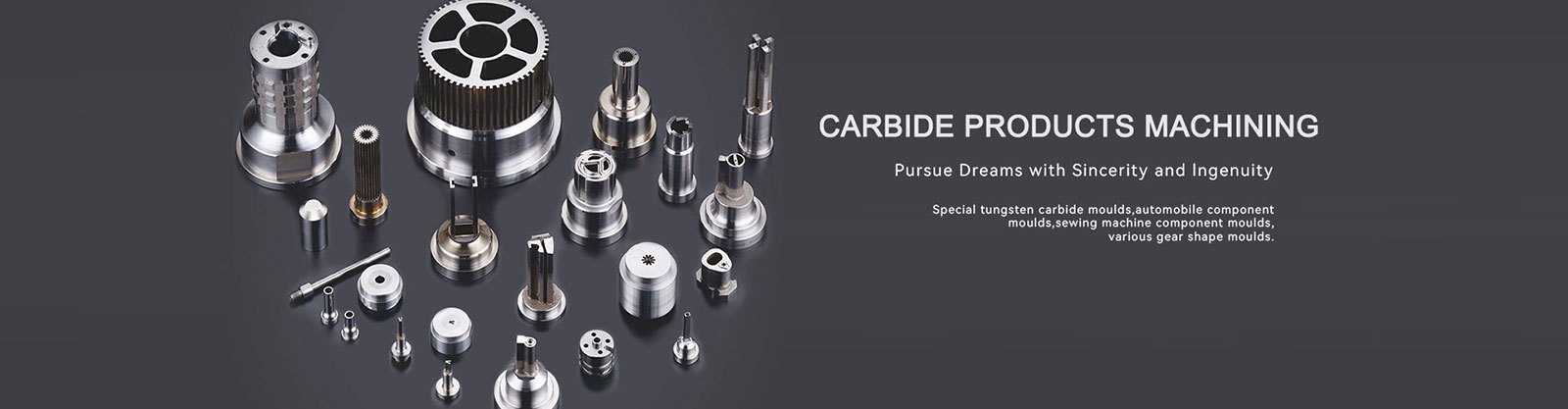

Cheap Custom Tungsten Carbide Stamping Die Parts Machining
Custom Tungsten Carbide Stamping Die Parts Machining is specified with Grade: K10 , K20 , W1 , HSS. Machining: Grinding, Wire Cutting. For B2B sourcing.
- Info
| Product Attributes | |
| Name: Stamping die parts, | Grade: K10 , K20 , W1 , HSS, |
| Origin: China | Main Metal Content: 99.9% |
| Impurity Content: 0.1% | Particle Size: 20-40 mesh |
| Machining: Grinding, Wire Cutting | Customizable: Yes |
| Hardness: 87-95 HRA | Precision: 0.003 mm |
| Drawing requirements: 2D or 3D drawings and technical specifications | Tolerance basis: According to customer drawings and application requirements |
| Quality inspection: Dimensional inspection before shipment | Inspection report: Available upon request |

Stamping dies are specialized equipment used in cold stamping processes, whereby materials (metal or non-metal) are fashioned into parts (or semi-finished products), and are referred to as cold stamping dies (commonly known as cold dies). Stamping involves applying pressure to the material at room temperature using dies mounted on a press, causing the material to either separate or undergo plastic deformation, thereby obtaining the desired part through a method of pressure processing.
Email: [email protected] | WhatsApp: +86 186 3895 1317 | Request a Quote
Tungsten carbide, utilized for its superior hardness and wear resistance over any other type of mold steel, does have lower bending strength and toughness. Tungsten-cobalt tungsten carbide, which are used for dies that experience minimal impact but require high wear resistance, can be selected with a lower cobalt content. For dies that are subject to greater impacts, a higher cobalt content tungsten carbide is advisable.
Steel-bonded tungsten carbide are produced by adding a small amount of alloying element powders (such as chromium, molybdenum, tungsten, vanadium) to iron powder used as a binder, with titanium carbide or tungsten carbide serving as the hard phase, and are sintered using powder metallurgy methods. The matrix of steel-bonded tungsten carbide is steel, which overcomes the drawbacks of poor toughness and difficult machining typical of tungsten carbide. Steel-bonded tungsten carbide can be machined, welded, forged, and heat-treated. Although their hardness and wear resistance are lower than those of tungsten carbide, they still surpass other types of steel and can reach hardness levels of 68 to 73 HRC after quenching and tempering.


Ordering & Quality
- MOQ
- From 1 piece
- Lead Time
- Typically 10–15 days
- Payment Terms
- T/T, PayPal, Western Union
- Shipping
- DHL, FedEx, UPS, or sea freight
- Packaging
- Foam, export carton, or wooden case
- Confidentiality
- NDA available on request
- Certified Quality Systems
- ISO 9001:2015 · ISO 13485:2016 · IATF 16949:2016 · GJB9001C View certificates and quality control
Final terms and production schedules are confirmed after reviewing the drawings, part complexity, and order quantity.
Still unsure which tungsten carbide grade fits your application? Our engineers will recommend the most suitable solution based on your requirements. MOQ: 1 piece, with competitive low-cost pricing.